
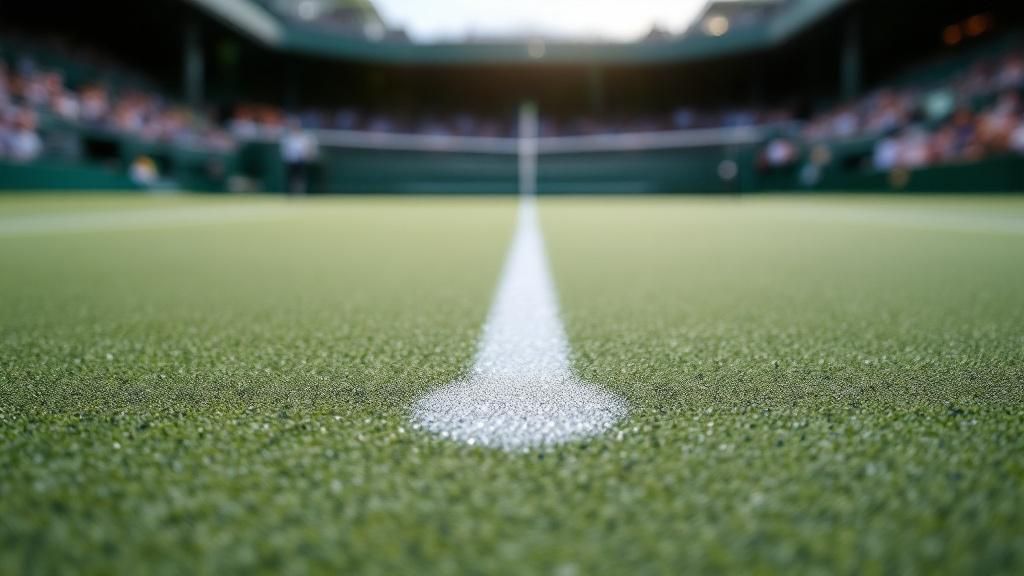
The All England Lawn Tennis and Croquet Club has taken a significant step towards safeguarding its athletes by deploying state-of-the-art court technology at Wimbledon. As injuries from slips and falls pose ongoing challenges to tennis professionals worldwide, the Grounds Committee has invested in innovative materials engineered to improve traction and lower pressure on players’ joints. This groundbreaking initiative promises to revolutionise the championship experience whilst upholding the traditional grass court identity and unique surface properties that have shaped the tournament for generations.
Cutting-edge Surface Technology at the All England Club
The All England Lawn Tennis and Croquet Club has implemented a transformative approach to player welfare through the deployment of cutting-edge playing surface systems. This groundbreaking programme demonstrates a significant change in how the Championships emphasise player protection without undermining the traditional grass court experience that has become iconic to Wimbledon. The Grounds Committee’s dedication to advancement demonstrates the club’s drive to progress with modern sporting standards.
The innovative surface technology combines sophisticated engineering principles designed to reduce injury potential whilst retaining the distinctive playing characteristics that players and spectators appreciate. By incorporating advanced materials into the facility infrastructure, Wimbledon has placed itself at the vanguard of playing surface innovation. This measured strategy guarantees that the tournament preserves its legendary standing whilst embracing contemporary player safety protocols and healthcare innovations.
Cutting-Edge Materials and Engineering
The technical basis of Wimbledon’s new court surfaces relies upon carefully chosen materials engineered to optimise performance and safety. These components operate in concert to improve grip stability, minimise slipping occurrences, and lower joint stress levels during demanding competition. The technical team has undertaken thorough evaluation to ensure that the new materials satisfy strict performance requirements whilst complementing the court’s inherent properties and climate fluctuations.
The rollout strategy entailed partnership among top-tier sports scientists, engineering experts, and turf professionals. Their combined expertise has delivered a advanced framework that tackles the primary concerns identified by professional competitors and healthcare professionals. The new technology embodies years of R&D work, guaranteeing that every feature of the court contributes meaningfully to enhanced player protection and consistent performance throughout the tournament.
- Improved grip technology decreases slipping incidents throughout competitive play considerably.
- Impact-absorbing materials lessen stress on knees, ankles, and leg joints.
- Moisture management systems preserve ideal playing conditions throughout tournament duration.
- Durability enhancements deliver reliable playing surface quality throughout several weeks of play.
- Grass integration retains conventional playing qualities and visual appeal authentically.
Participant Safety and Performance Advantages
The introduction of this cutting-edge playing surface technology constitutes a transformative moment for elite tennis competition at Wimbledon. Players can now perform with enhanced certainty, knowing that the improved traction and impact-reducing properties substantially lower the risk of injury. This innovation demonstrates the All England Club’s steadfast dedication to competitor wellbeing whilst protecting the heritage grass court feel that makes Wimbledon distinctly renowned and internationally acknowledged.
Beyond injury avoidance, the latest surface innovation offers considerable performance advantages for competitors. Enhanced traction allows players to deliver powerful actions, swift lateral movements, and forceful baseline tactics with greater stability. The enhanced playing surface enable athletes to showcase their full capabilities whilst decreasing physical stress linked to intense match play, ultimately supporting sustained professional careers within elite tennis.
Preventing Injuries and Enhanced Comfort
The advanced materials integrated within the new court surface have been meticulously engineered to address the frequent injuries associated with tennis. The shock-absorbing properties successfully absorb impact forces passing through players’ legs and joints during powerful motions, serving and rapid deceleration. Healthcare specialists and athletic researchers have endorsed these developments through comprehensive trials, confirming significant decreases in injury occurrence rates amongst top-level players competing on the redesigned playing areas.
Player comfort has been significantly boosted through careful consideration of surface feedback and responsiveness. The technology offers superior ball response performance whilst maintaining the uniform playing environment required for competitive fairness. Athletes report improved confidence during play, attributing this to the reliable surface behaviour and minimised physical stress. These comfort benefits have a major impact on better performance results and increased satisfaction throughout tournament play.
- Improved grip reduces slip-related injuries whilst playing.
- Shock absorption lessens joint stress and damage from impact.
- Enhanced stability facilitates explosive athletic movements safely.
- Consistent surface behaviour ensures predictable ball behaviour.
- Decreased fatigue allows longer periods of competitive play.
Rolling Out and What Lies Ahead
The Wimbledon Grounds Committee has established a extensive implementation framework, starting with the perimeter courts during the 2024 campaign. This gradual implementation allows the committee to track performance data and collect important information before implementing the technology across all competition venues. The advanced court surface demonstrates exceptional longevity and maintains optimal playing conditions throughout lengthy tournament runs, significantly reducing maintenance requirements whilst ensuring consistent player experience across every match and surface.
Looking ahead, the committee anticipates that this technological advancement will create a standard for other Grand Slam tournaments and professional tennis establishments globally. The investment demonstrates Wimbledon’s commitment to innovation without compromising its traditional values and grass court heritage. Preliminary evidence suggest that the upgraded protective systems will appeal to leading athletes, potentially enhancing the tournament’s standing further whilst setting new benchmarks for player welfare and court surface excellence.
Changeover Schedule and Player Feedback
The rollout schedule spans eighteen months, with thorough evaluation occurring during 2024 and total rollout anticipated by the Championships in 2025. The Grounds Committee has prioritised gathering feedback from touring professionals, coaching staff, and medical personnel to ensure the technology satisfies stringent performance requirements. First reactions from elite players have been overwhelmingly positive, with players highlighting the enhanced steadiness and lower joint impact during rigorous practice and competitive matches on the newly laid playing surfaces.
Player consultation sessions have demonstrated that the superior grip technology markedly enhances confidence during quick changes of direction and dynamic athletic movements. Medical professionals have recorded measurable reductions in ankle and knee strain levels during preliminary assessments. The continuous feedback process stays engaged, with the committee conducting quarterly reviews and implementing small modifications based on expert feedback. This joint working method confirms that the innovation develops according to genuine player experiences and needs.
- Outer courts improved during the 2024 season for comprehensive performance evaluation.
- Centre and Number One courts receiving technology installation by fall 2024.
- Professional players offering detailed feedback through organised consultation meetings.
- Medical team reviewing injury data and physiological response data continuously.
- Committee planning to expand of technology to training facilities by 2025.
